The Taste Sensation Umami Can Best Be Described as
To apply this umami taste sensitivity test for clinical use the reproducibility of the test is essential. Umami which is also known as monosodium glutamate is one of the core fifth tastes including sweet sour bitter and salty.
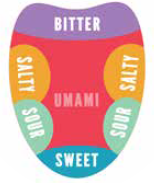
The Five Basic Tastes Newly Weds Foods
Brings out the best.
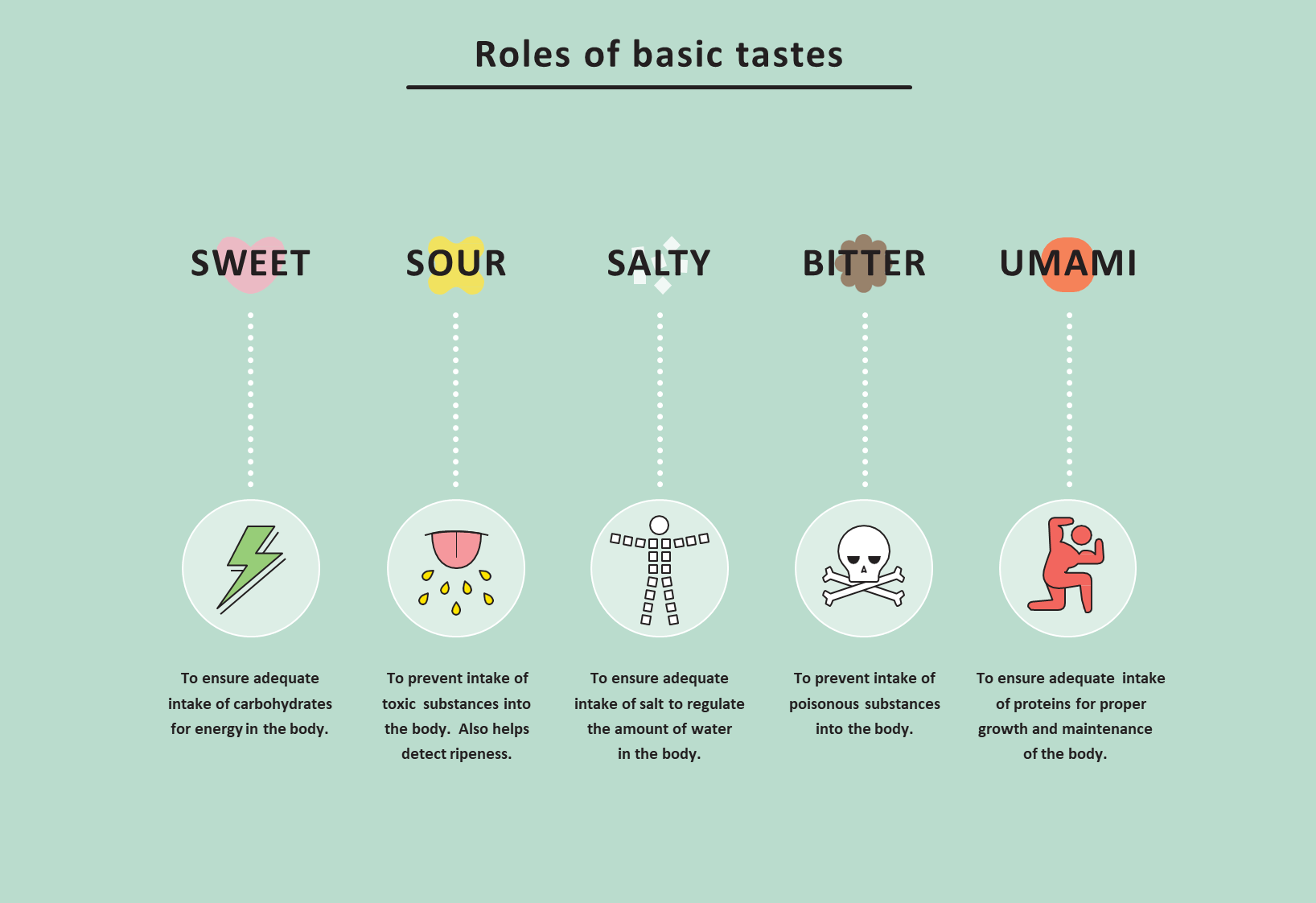
. It balances and deepens flavor and contributes to what is often described as a savory or meaty flavor Learn more about nutrition and health with Openfit. Umami taste was first described in Japan by Kikunae Ikeda in 1908. Kikunae Ikeda to describe the flavor of the amino acid L-glutamate and nucleotides.
Umami creates both appetite appeal and satiety the feeling of being gratified to the fullest extent. Medical Definition of umami. Umami is the fifth basic taste in addition to sour sweet salty and bitter says Kara Lydon RD LDN owner of Kara Lydon Nutrition in Boston.
The combination of salt and sweet tastes togetherC. Salty and sour taste sensations are detected through ion channels while sweet bitter and umami tastes are detected by way of G protein-coupled taste receptors. Umami is more than a buzz word Umami is the core fifth taste.
The umami taste is often described as a meaty broth-like or savory taste and is independent of the four traditional basic tastes sweet sour salty and bitter. Its best described as savorya taste rich in flavor released by. The taste sensation umami can best be described asA.
This flavor is called umami which means delicious or yummy in Japanese and its taste has been described as rich round and savory. Thus umami taste function seems to play an important role in the maintenance of oral and overall health. A somewhat salty flavor derived from metal ionsB.
L-Glutamate elicits the umami taste sensation now recognized as a fifth distinct taste quality. A savory or meaty taste derived from the amino acid glutamate. Its since gained a reputation as the fifth taste the one thats not salty sour sweet or bitter.
D the taste that arises from compounds such as. Thus option c is correct answer. The taste that arises from compounds such as caffeine and quinine.
Sweet salty bitter sour and umami. Ikeda coined the word umami which roughly translates to pleasant savory flavor The term moved into more popular usage in the latter half of the 20th century. Green tea is known for containing a high amount of glutamate an amino acid which produces a satisfying savory umami taste.
The taste sensation umami can best be described as A a somewhat salty flavor derived from metal ions. A savory or meaty taste derived from the amino acid glutamate. Umami is a taste that spreads across the tongue coating it thoroughly lingering bringing a mouthwatering sensation.
However it wasnt officially recognized as a fifth taste until the 1980s. Try it out for free today. The appreciation of taste starts with the taste receptors on the tongue.
The combination of salt and sweet tastes together. Umami means essence of deliciousness in Japanese and its taste is often described as the meaty savory deliciousness that deepens flavor. Umami was coined in 1908 by Dr.
Taste receptors are on microvilli of taste bud in papillae which are on the rough side of the tongue. Umami is the Japanese word for the savory taste of amino acids such as monosodium glutamate MSG. Umami taste can is best described as a savory taste.
Umami is a Japanese word meaning Deliciousdesignating a pleasant taste sensation that is qualitatively different from soursaltysweet or bitter Umami is dominant taste of asian food containing L-glutamate especially Monosodium glutamate such. Diagnostic performance of our test for discriminating between normal and abnormal umami taste sensation. A characteristic feature of umami taste is its potentiation by 5-ribonucleotides such as guanosine-5-monophosphate and inosine 5-monophosphate which also elicit the.
Solutions for Chapter 4 Problem 19MCQ. The Sensation Of Taste Can Be Categorized Into Six Basic Tastes Sour Umami Piquance Sweet Bitter And Salty Learn Mor Food Infographic Umami Food Science There Are 5 Primary Sensations Throughout The Tongue Sweet Salty Sour Bitter And Umami This Chart Shows An Example Of Each As Well As Apuntes Vinos Mapas. Umami highlights sweetness and lessens bitterness.
The taste that arises from compounds such as caffeine and quinine. B the combination of salt and sweet tastes together. Japanese for delicious taste umami is produced by certain amino acids.
UMAMI TASTE Some physiologists consider it to be a separate 5th category of primary taste sensations. The sense of umami taste promotes salivary secretion and saliva strongly influences oral functions such as taste sensation. C a savory or meaty taste derived from the amino acid glutamate.
Umami counterbalances saltiness and allows up to a 50 percent salt reduction without compromising flavor. A somewhat salty flavor derived from metal ions. In this respect our test showed high reliability for intra- and inter-observer variability as determined by the kappa statistic.
A savory or meaty taste derived from the amino acid glutamateD. A taste sensation that is meaty or savory and is produced by several amino acids and nucleotides as aspartate inosinate and glutamate Other Words from umami. Anyone who has tried green tea will perhaps have sensed varying levels of.
There are five basic types of tastes. And it seems to be the toughest one to nail down.

The Sensation Of Taste Can Be Categorized Into Six Basic Tastes Sour Umami Piquance Sweet Bitter And Salty Learn Mor Food Infographic Umami Food Science

Human Tongue Basic Taste Areas Smack Map In Mouth Sweet Sa
What Are The 5 Basic Tastes Everything About Umami Umami Ajinomoto Group Global Website Eat Well Live Well
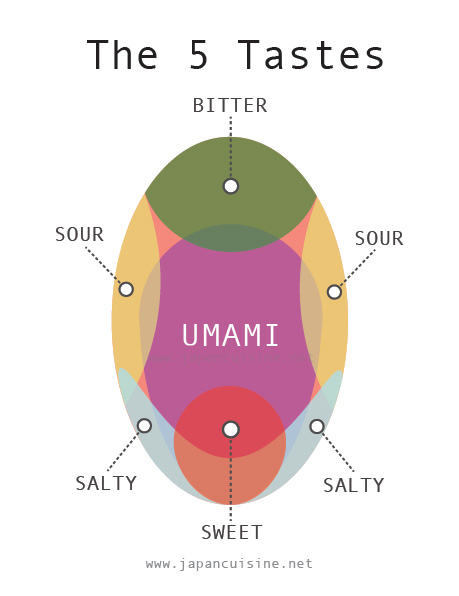
Umami The 5th Taste Of Japanese Cuisine Explained


Comments
Post a Comment